History
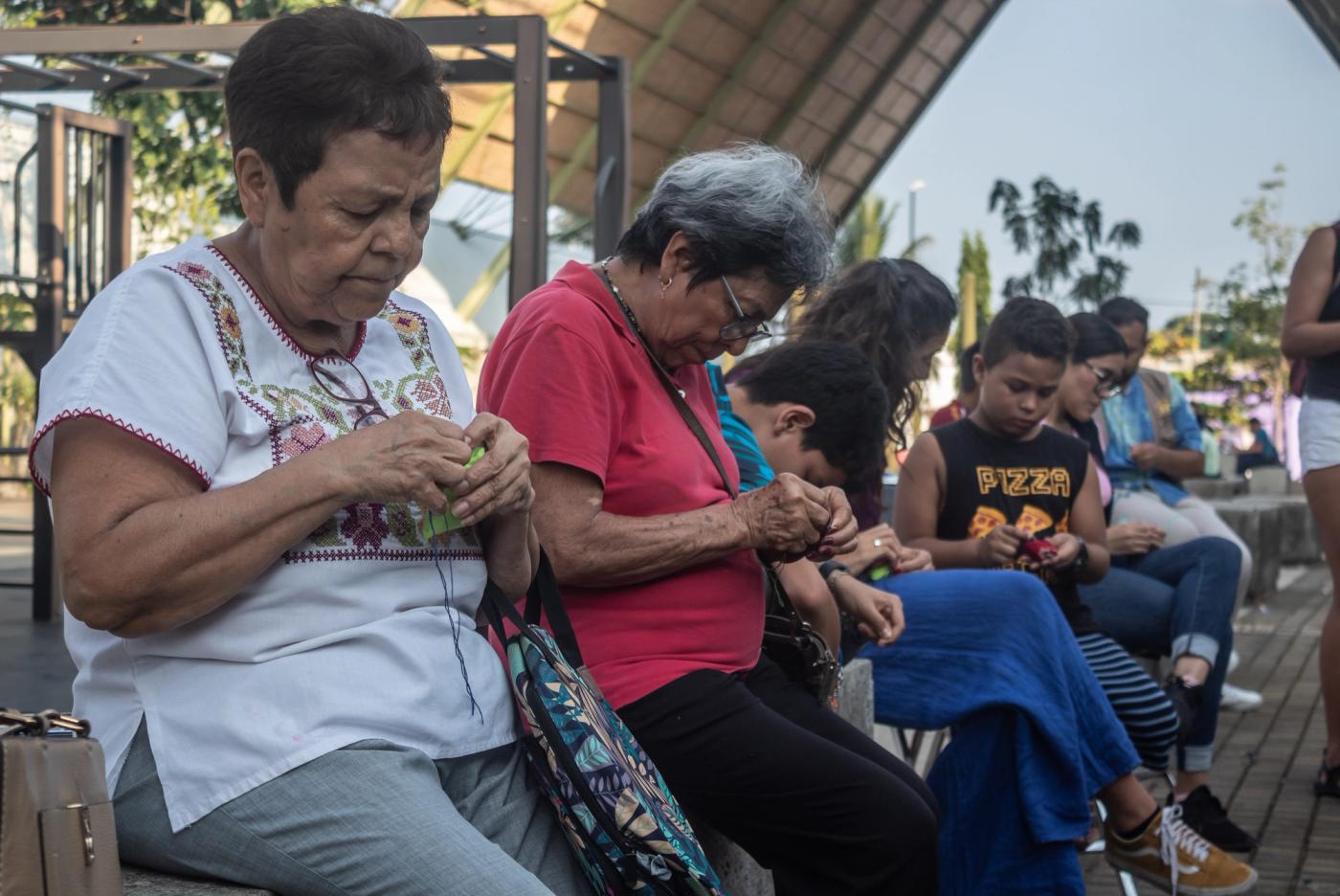
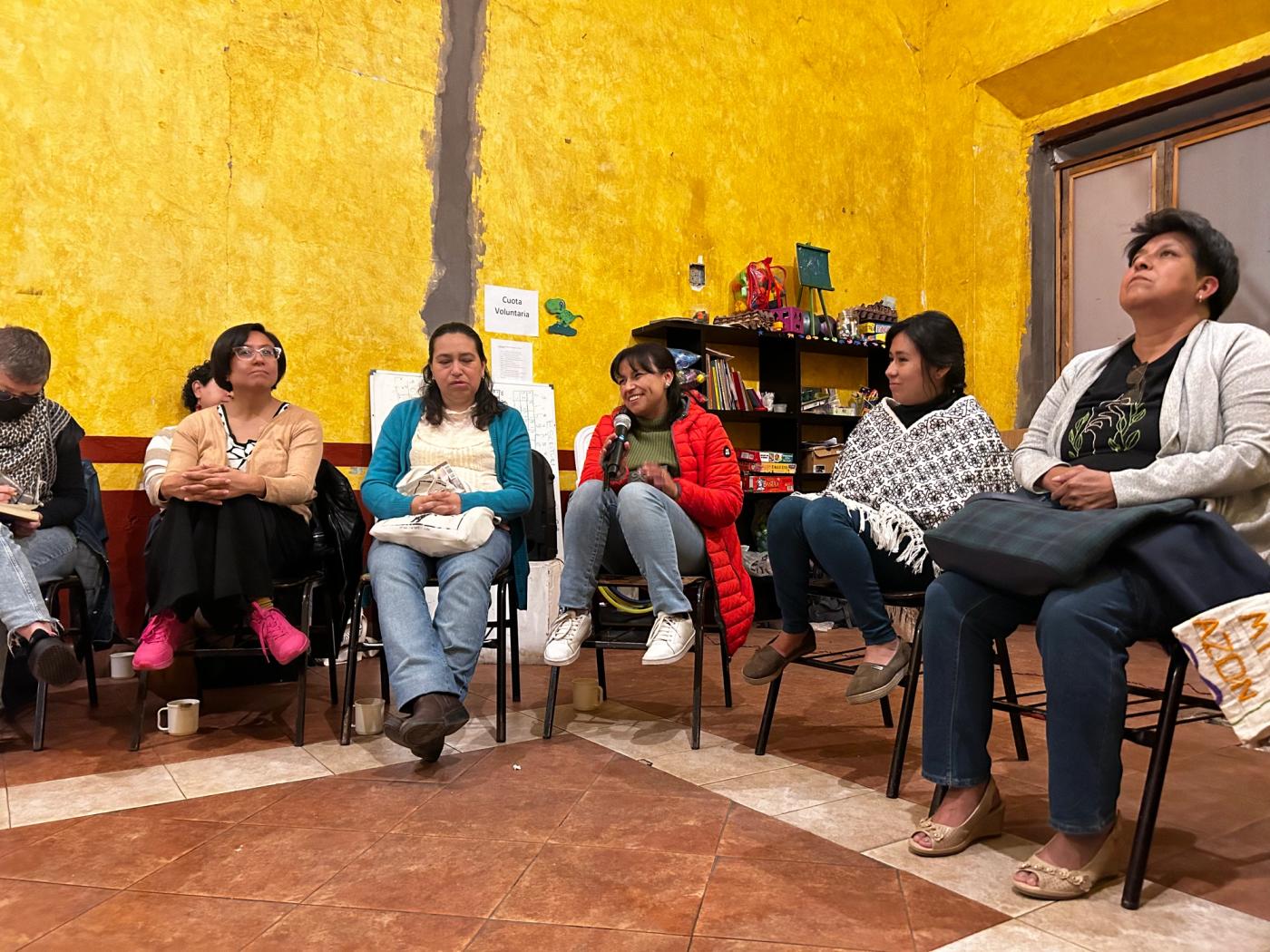
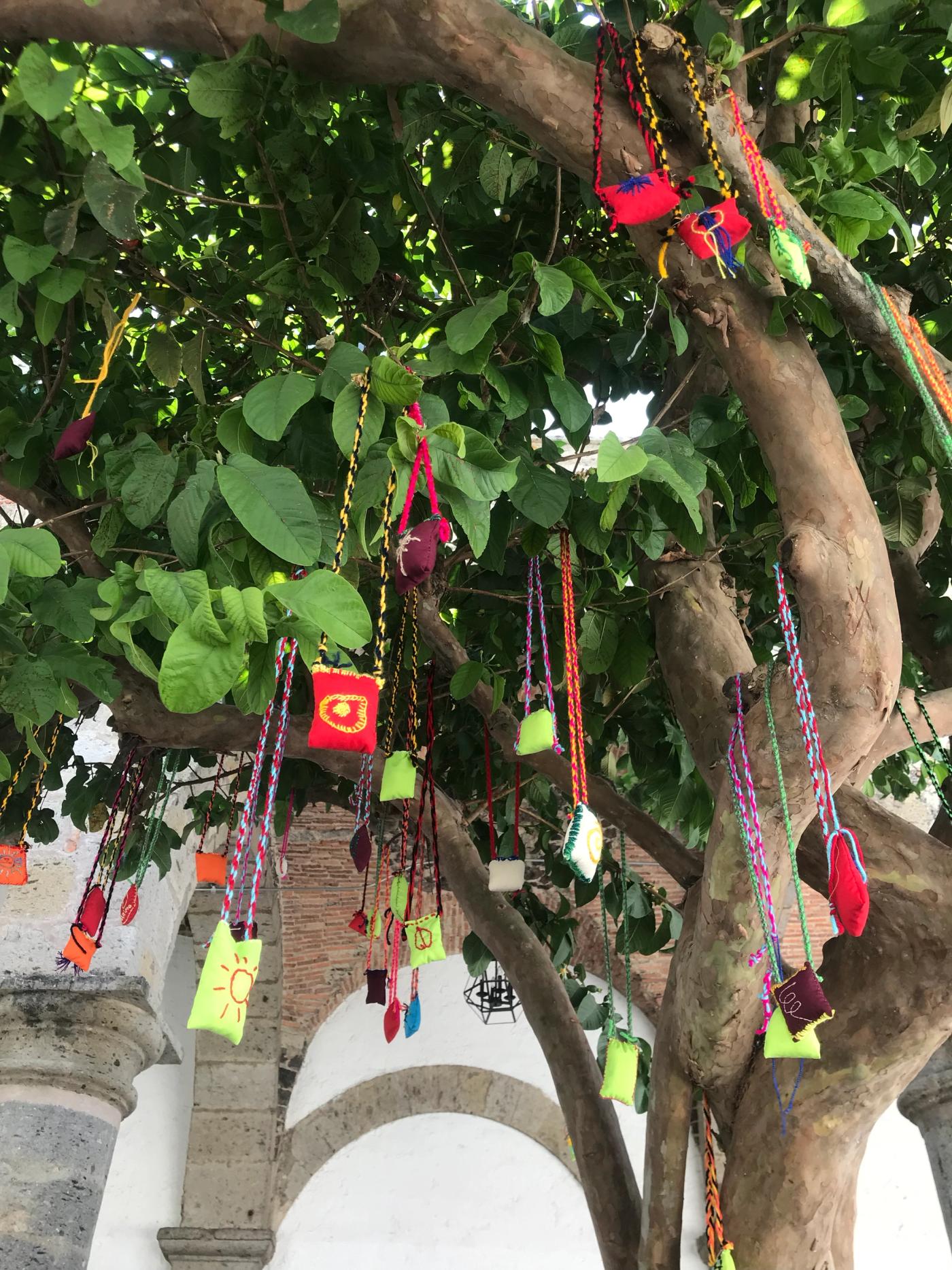
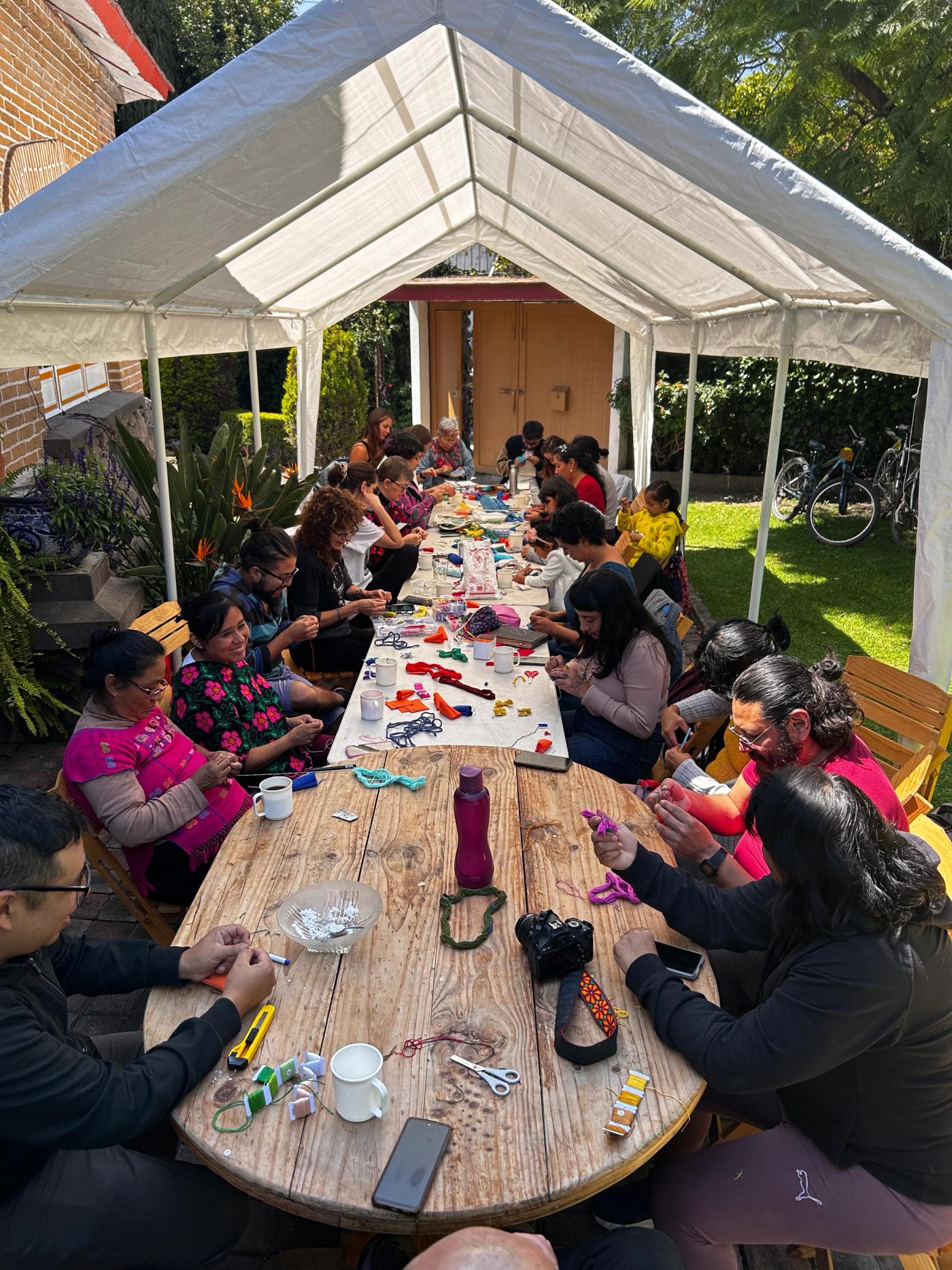
In March 2023, at FM4 Paso Libre (a shelter for migrants in transit in Guadalajara, Jalisco), a group of women sat down to embroider for three days. The gathering took place within the framework of Chicano Fest and the sound installation Esculpir el silencio (Sculpting Silence) by Tamara Cubas: a landscape made of salt that held the stories of women who had crossed borders. On the second day, an idea emerged prompted by the questions: What sustains you during the journey? Where do you find the strength to keep going? Between stitches, a recurring scene appeared: almost all of them carried small objects with disproportionate power. Some participants showed the cross their mother had given them before leaving home; the photograph of their youngest child; the bracelet that belonged to the grandmother who emboldened them; a small medal of the Virgin, a necklace. From this encounter came the first 30 amulets — the seed amulets — which a few days later would hang from the orange tree at the Exconvento del Carmen.
This recalled the textile craft of the Seri (Comca’ac) women from Sonora, who make small pouches filled with white sage to provide protection. It was then decided to combine that tradition with the coarse salt that the Cooperative of Cuyutlán, Colima, had donated for the installation, and with what had been learned among migrant, displaced, and travelling women.
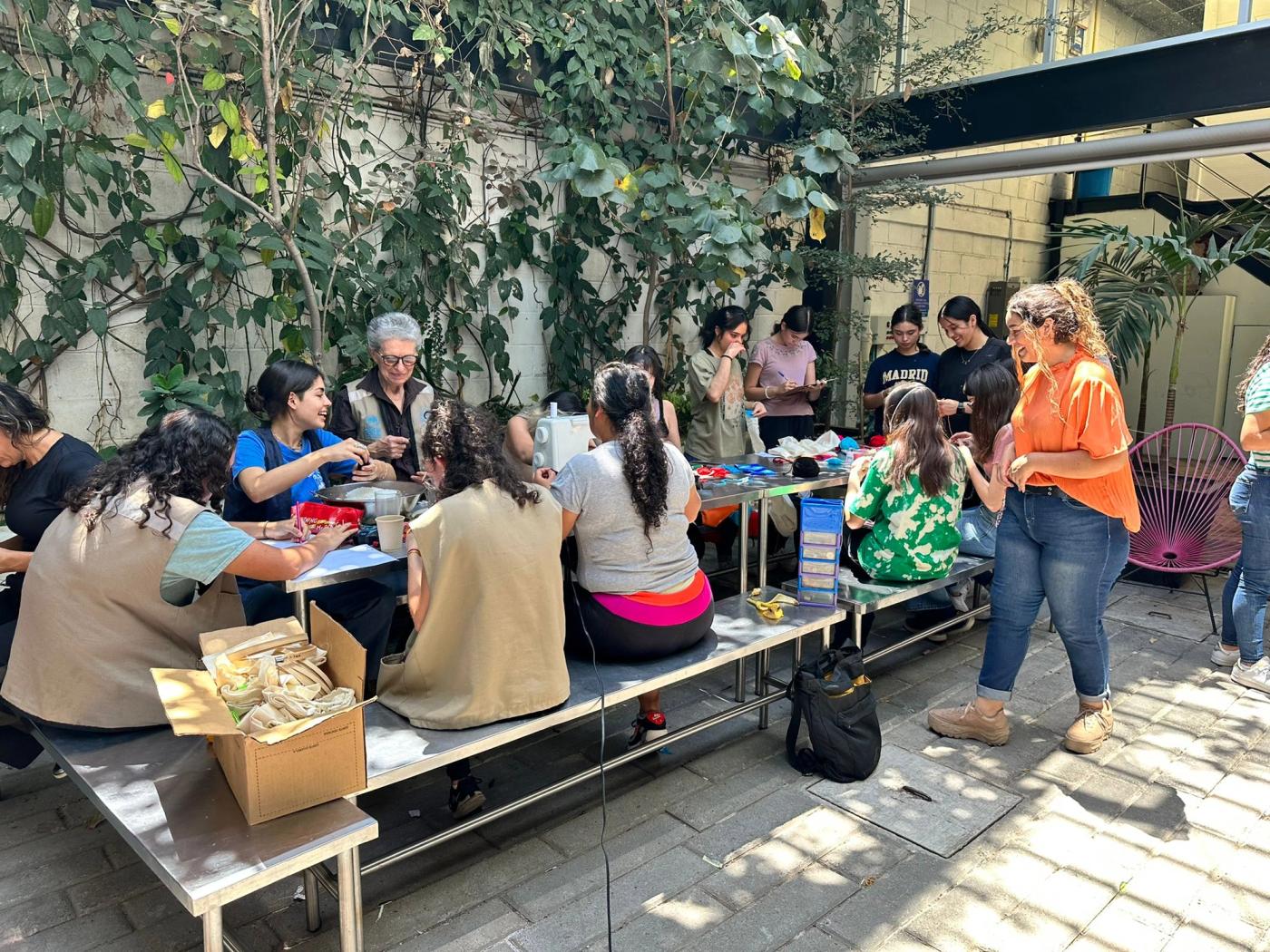
Thus emerged the idea of assembling salt-filled amulets and inviting anyone who wished to embroider them: a relational artifact that has since travelled through different spaces and hands.
In the contemporary landscape of violence in Mexico, collaborative textile practices — almost always driven by women — have gained particular strength as a repertoire of public intervention. From the simplicity of its medium, textile work operates as a persistent interruption in the face of forced disappearance and other forms of sustained cruelty: it holds names, expresses demands, and enables forms of affection and collective organization. This phenomenon has been called the textile turn in collaborative practices, which can be understood as a Relational Activation Device (DAR).
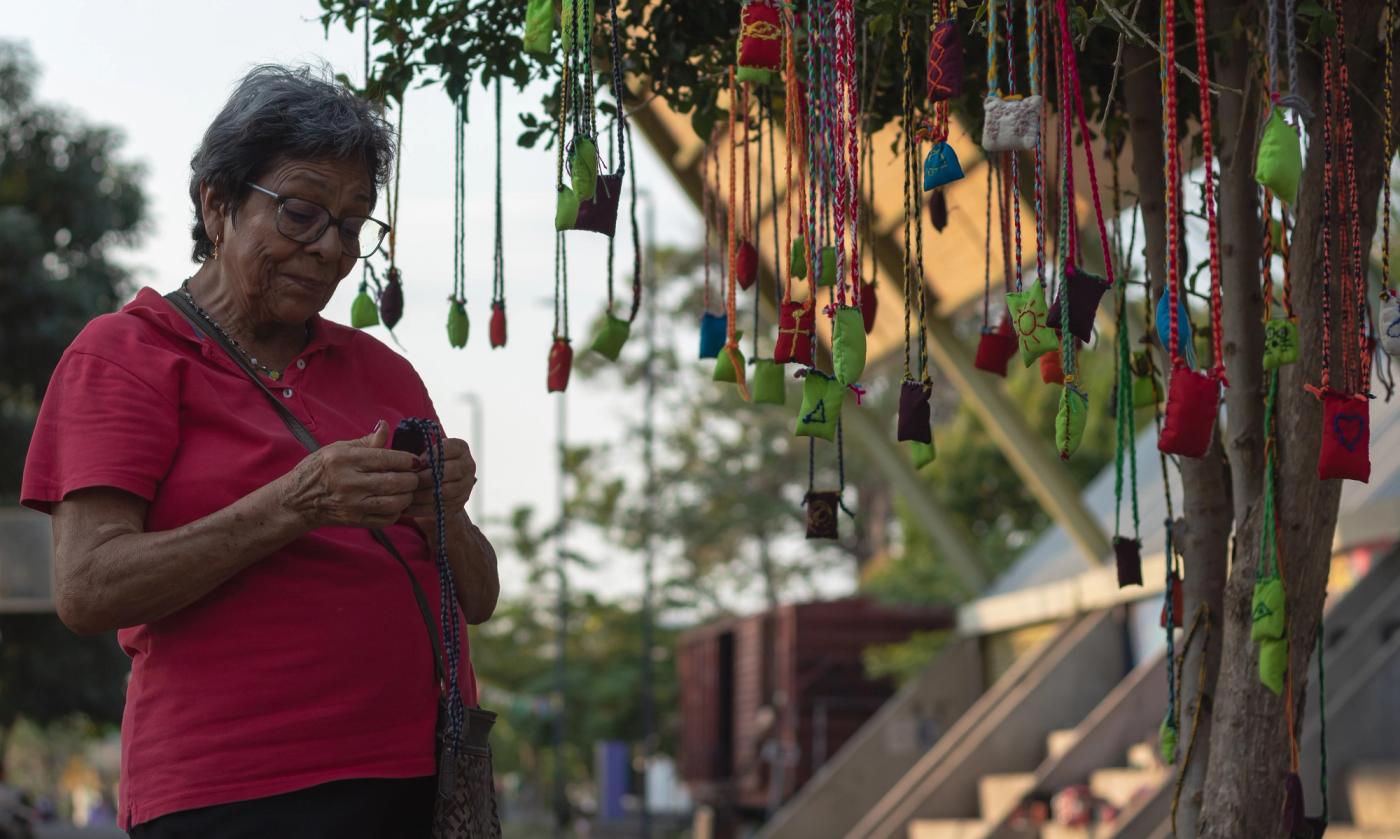
What is an amulet?
An amulet is an object endowed with a protective force that is given as a gift, with the hope that its power will protect the person who carries it. The amulet exceeds the immediate materiality of the object and becomes something more, because within it a special magic is deposited — a kind of gift that allows one to resist, evade danger or illness, and offer or find comfort in the darkest moments.
Throughout human history, amulets or talismans have been portable objects imbued with a powerful protective magic against the uncertainties of existence. In some way, the real or symbolic characteristics of the objects are transferred to the person who carries them, granting them those forces. Thus, a lock of ox hair, a small piece of frog skin, a fragment of animal bone, or a stone transfers its powers to the person, helping them slip away from danger or protect themselves against demons, witches, and ghosts.
Amulets are objects charged with affection that one person gives to another as protection. These objects matter because they protect the one who carries them. On the one hand, they reveal the harshness of life; at the same time, they embody a relationship of care and companionship.
The act and textile practice of these amulets, understood as relational activation devices, create constellations of brief stories that conjure against exposure and overwhelming forces; they call for listening and closeness.
What poetics of relation can a minimal object open when it circulates as a gift in times of brutality?
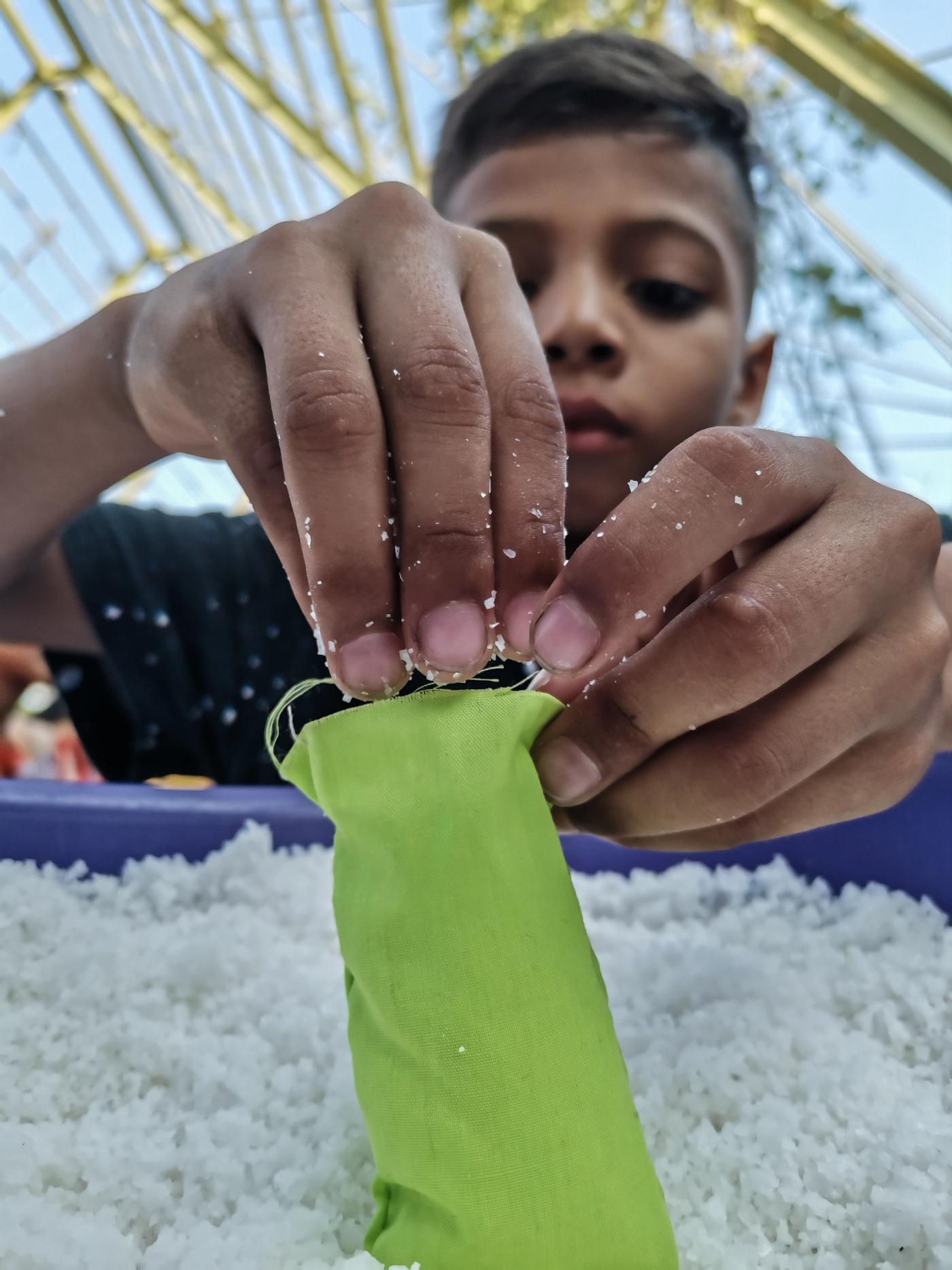
Salt
The materiality of salt carries a historical weight that goes back more than 4,700 years, along with its many uses and meanings. We know that the word salary comes from the use of salt as a form of payment. In some cultures it has served to ward off evil spirits; in others it has been associated with luck; and it is also an excellent food preservative.
In Sculpting Silence, salt is associated with women’s disobedience. Tamara Cubas revisits the passage from Genesis 19 in which Edith disobeys God by looking back toward Sodom and Gomorrah as they burn in flames. For disobeying orders, she was turned into a pillar of salt. Reclaiming this passage allows new questions to emerge: what did she see that she could not tell us? Edith had begun a journey fleeing from horror. When she looked back toward her place of origin, she was punished, and with her died her story, while her name was nearly forgotten.
This is the salt that first summoned the project. The search for it led to Cuyutlán, Colima, where members of the Salt Workers’ Cooperative shared their stories: the ancestral process of harvesting salt, the different tools used to extract it, the exhausting workdays during the dry season in the salt fields, and the technological changes over time.
These stories mixed with tales of ghosts and spirits, anecdotes of celebrations, and struggles to sustain the cooperative’s work in the face of industrialized salt extraction processes. In Cuyutlán, coarse salt is harvested. It was this community that became part of the Sculpting Silence project, and whose salt is now kept in small cloth pouches where many people have been crafting amulets to give to strangers.
Relational Activation Device (DAR)
The Amulets project is part of the textile turn in collaborative practices: a field of aesthetic-political practices connected to activism and collectives that can be understood as Relational Activation Devices (DAR). These practices intervene in public space, dispute dominant regimes of visibility, and enable alternative modes of social connection.
The act and textile practice of these amulets function as participatory practices that generate unexpected encounters and other ways of relating to pain and violence. They unfold through participatory activations centred on making small textile amulets: embroidered pouches filled with personal symbols and materials of care, designed to be worn close to the body and accompany displacement, harm, and searching.